Representation of Young People in the Media

Teenagers are often seen by society as trouble makers, alcohol lovers and unstable. This representation is not particularly helped by the media as most news stories about young people focus on gang violence, drinking and mental health. By glancing through some of the news stories online that have been published by the Guardian and the Independent, most stories focus on negative subjects. This can be further proved by Clark et al’s study who found that most young people feel the media represents them as ‘antisocial and a group to be feared’ (2008). Through analysing some of the most recent headlines from news outlets, the representation of young people can be seen as problematic.

Headline 1 – Antidepressants are risky and ineffective – So why are we prescribing them to children?(The Independent, 2019). 

Headline 2 – Teenage suicides in England and Wales rise 67% since 2010(The Independent, 2019) 

Focusing on headlines 1 and 2 it is clear to see that the media tends to focus on the mental health of teenagers and some of the shocking statistics that reveal an increase in suicides. The article continues to say that social media and the increase of tuition fees may be to blame but more often than not it is the lack of support provided by mental health services, says the article. Chapman et al, found that 26% of news articles involving young peoples’ mental illnesses were portrayed negatively whilst positive themes were significantly less frequent for young people compared to adults. 

Headline 3 – County lines drugs blamed for Kent’s big rise in knife crime(Guardian, 2019). 

This is just one example of a negative headline published surrounding young people and crime. With mentions of ‘gangs’, ‘bruised’ and ‘youths’ in the article the overall tone is negative with increasing worries about numbers of knife crime incidents among young people. Although important issues need to be documented, this is a small minority of young people committing these crimes and not the majority, as news outlets often insinuate.

Headline 4 – How do your porn habits compare with young people across Britain?(BBC News, 2019). 

Finally, porn is a regularly documented topic and young people are often pulled into the articles and headlines. Within headline 4, young people are presented as ‘other’ and their viewing of porn is seen to be regular and unhealthy. It is obvious to say that a lot of adults are addicted to porn yet headlines such as this would never be presented in the same way. 

Osgerby and Pearson found that ‘the demonization of young people in the United Kingdom dates back at least to the 18thcentury’, proving that ‘the construction of young people as a “problem” is certainly not new’ (Henderson, et al., 2008: 1). More headlines need to focus on the successes, of teens such as protesting for what they believe in, achievements in exam results and their open-minded ability to accept people for who they are. 

(BBC News)

Word Count: 488

Reference List: 

Clark, C., Ghosh, A., Green, E. and Shariff., Naushin (2008) ‘Media Portrayl of Young People – Impact and Influences’ Young Researcher Network [online]  1-34. 

Henderson, L., Murray, C., Petley, J. and Wayne, M. (2008) ‘Television News and the Symbolic Criminalization of Young People’ Journalism Studies [online]9 (1): 75-90.

McLean, M., (2019) ‘How do your Porn Habits Compare with Young People Across Britain?’ BBC News Available from: https://www.bbc.co.uk/bbcthree/article/bb79a2ce-0de4-4965-98f0-9ebbcfcc2a60[Acessed on 17thMarch 2019]. 

Howkick, J., (2018)  ‘Antidepressants are Risky and Ineffective – So Why are we Prescribing them to Children?’ Independent [online]  Available from: https://www.independent.co.uk/life-style/health-and-families/depression-antidepressants-children-medication-mental-health-exercise-young-people-suicide-a8489281.html[Accessed on 17th March 2019]. 

Khan, S., (2018) ‘Teenage Suicides in England and Wales Rise 67% Since 2010’Independent [online] Available from: https://www.independent.co.uk/news/uk/home-news/teenage-suicides-england-and-wales-2010-ons-a8522331.html[Accessed on 17th March 2019]. 

Quinn, B., (2019) ‘County Lines Drugs Blamed for Kent’s Big Rise in Knife Crime’ The Guardian [online] Available from: https://www.theguardian.com/uk-news/2019/mar/10/county-lines-drugs-kent-knife-crime-rise-cuts[Accessed on 17th March 2019]. 

Representation of Female Athletes in the Media

When we pick up a newspaper and flick through to the sports at the back we are confronted by successful sportsmen, the latest premier league updates and masculine action shots. But what about the England’s women’s netball team who have just won the quad series? What about Serena Williams who bounces back from having a baby and continues to play some of the best tennis of her life? Occassionally on the news there may be a ten second slot allocated to women’s sporting achievements but the mainstream media very rarely goes beyond this. Sports women are deeply under-represented in the media even though they are successful and are winning major titles. 

The lack of representation of women’s sport in the media has a serious impact on visibility for young girls and therefore participation. A study from 2006 found that in seven national and regional newspapers the average space dedicated to women and girls’ sports was 4.8% of the total and that only 5.2% of all articles devoted to female sports (SportSotland, 2008). In order for broadcasters to show women’s sport there has to be evidence of profit and many people suggest that fans are not interested in watching women’s sport. However, new research found that up to 80% of sports fans, more than half whom are men, are interested in women’s sport. (BBC Sport, 2018). So why are female athletes making nowhere near as much money as men? Why aren’t their sporting achievements being recognized as prominently as men’s? 

Independent (2018)

Focusing on BBC Sport and women’s football, some of the headlines focus on the athlete’s lives and appearance rather than their sporting success. One example of a headline is: 

‘Sydney Leroux: World Cup Winner Returns to Training at Nearly Six Months Pregnant’(BBC Sport, 2019)

Her pregnancy is highly focused upon within the article with comments from Leroux herself. Although her achievements are acknowledged such as, ’75 caps for the US national team’ these fade into the background as the focus continues on her miscarriage, husband and pregnancy. Another headline states: 

‘”Her Hair is Like Mine, Can I be A Referee?”‘(BBC Sport, 2019)

Although this is a quote taken from a young girl after seeing a female referee, the headline still focuses on the appearance of women and their feminine features. Positive changes are being made very slowly but in order for men and women to be recognised as equal in sports there is still a long way to go. 

Andrzejczyk et al state that ‘female athletes frequently struggle with the social expectations surrounding femininity juxtaposed with the physical demands of their sport’ (2010). Society releases sexualised photos of female athletes which is damaging as sport is not about your appearance it is about your talent and ability, just like it is in the men’s game. News outlets need to stop the focus on appearance of female athletes and start fixating on the results, talent and advertising it a lot more.

Word Count: 491

Reference List

Andrzejczyk, J., Ganoe, K., Krane, V., Lucas, C., Miller, M., Ross, S. and Rowse, J. (2010) ‘Power and Focus: Self-Representation of Female College Athletes’ Qualitative Research in Sport and Exercise [online] 2 (2): 175-195 Available from: https://www.tandfonline.com/doi/pdf/10.1080/19398441.2010.488026?needAccess=true[Accessed on 9thMarch 2019]. 

BBC News (2018) ‘Women’s Sport: New Research Finds More than 80% of Sports Fans are Interested’ BBC Sport [online] Available from: https://www.bbc.co.uk/sport/45737718[Accessed on 10th March 2019]. 

Parker, Ian (2018) ‘Commonwealth Games 2018: England race the best gold until last to finish second in medal table behind Australia’ Independent [online] Available from: https://www.independent.co.uk/sport/commonwealth-games/commonwealth-games-2018-england-netball-medal-table-australia-a8305546.html [Accessed on 10th March 2019].

SportScotland (2008) Women, Sport and the Media. Available from: https://funding4sport.co.uk/downloads/women_sport_media.pdf[Accessed on 11th March 2019]. 

How damaging is ‘Fake News’?

‘Fake news’ is a relatively new term as a result of the increasing number of users involved in the media. ‘Fake news’ was crowned ‘word of the year in 2017’ and is one of Trump’s go to phrases throughout his precedency (Telegraph, 2019). Fake articles often circulate and are published on social media for one of two reasons, as a deliberate mistake to make money from a post or an inaccurate article due to poor journalism. Facebook is one of the biggest social media sites in the world but it has recently experienced some turmoil as the site fails to protect its users from fake sources. Due to the increasing difficulty of being able to identify fake news articles, vulnerable people are easily targeted and therefore spread the news further through sharing and liking posts. It is all seems relatively harmless, but is it? 

(Telegraph, 2019)

One of the biggest institutions affected by fake news is democracy as regulators need to ‘take urgent action to combat a growing crisis of data manipulation, disinformation and so-called fake news’ (Guardian, 2018). Voters, especially young people, are vulnerable to fake content online which may change the way they vote even though the information is not always true. If people are voting based on misinformation, this can have a serious effect on democracy as many parties have not used the information which has been claimed against them. 

Ruining democracy is one damaging issue but loosing lives because of fake news is a whole new field of disruption. In 2018, graphic images were circulated around Facebook which the publisher claimed were from Nigeria. According to the BBC, the users said that the pictures were from ‘Fulani Muslims killing Christians from the region’s Berom ethnic minority’ (BBC News, 2018). These photos were originally from Congo-Brazzaville, but they spread all across Nigeria like wild fire creating a war which was formed from inaccurate information. Eleven men lost their lives because of fake news. 

One of the most important questions is how do we distinguish between fake and real news? Apart from the obvious of checking the author and if the news is on any other legit news platforms, are there any linguistic clues into figuring this out? The University of Birmingham state, ‘an author who is trying to inform the public has a very different motivation than an author who is trying to deceive’ (Grieve, 2018), therefore it is important to be wary of the type of language features used in the content of news articles. It has been proven that fake news effects society in huge ways from threatening democracy to loss of lives. There is a need for stricter laws on social media in order to detect and stop the unnecessary spreading of fake news. 

Word Count: 460

Reference List:

Adegoke, Yemisi (2018) ‘Like. Share. Kill’ BBC News [online]  Available from: https://www.bbc.co.uk/news/resources/idt-sh/nigeria_fake_news [Accessed on 21st February 2019].

Carson, James (2019) ‘Fake news: what exactly is it – and how can you spot it?’ Telegraph [online] Available from: https://www.telegraph.co.uk/technology/0/fake-news-exactly-has-really-had-influence/ [Accessed on 21st February 2019].

Grieve, Jack (2018) ‘The Language of Fake News’ The University of Birmingham [online] Available from: https://www.birmingham.ac.uk/news/thebirminghambrief/items/2018/09/the-language-of-fake-news.aspx [Accessed on 21st February 2019].

Waterson, Jim (2018) ‘Democracy at Risk due to Fake News and Data Misuse, MPs Conclude’ The Guardian [online] Available from: https://www.theguardian.com/technology/2018/jul/27/fake-news-inquiry-data-misuse-deomcracy-at-risk-mps-conclude [Accessed on 20th February 2019].

Representation of Drugs in Today’s Media

Drugs are not only used by people all around the world, they are also commonly documented on within media outlets such as newspapers, films and magazines. But, what type of representation is created by the media when it comes to drugs?

According to Bonn and Nielsen, ‘few people have enough direct experience with the drug problem to gauge its severity…they learn about the drug problem indirectly through the media’ (Bonn and Nielsen, 2007: 727), a key reason as to why most people interact with the media. This emphasises the effect that the media has on people who are unaware of certain issues in society. 

Noticing a pattern in what triggers drug news is important in order to allow us to understand what makes a story newsworthy. According to a study by the UK Drug Policy Commission (UKDPC), they found that drugs relating to criminal justice were the most common cause of news stories closely followed by death (UKDPC, 2010). 

Taking a look at some of the most recent stories on BBC news, headlines often focus on students buying drugs as easily as it is to take them, drugs causing deaths and the ever-increasing problem of unknown substances:

Fake Xanax: Anxiety Drug Deaths an ‘Escalating Crisis’ Headline 1 (BBC News, 2019)

15-Year-Old Died From ‘Unknown Substance’ Headline 2 (BBC News, 2019) 

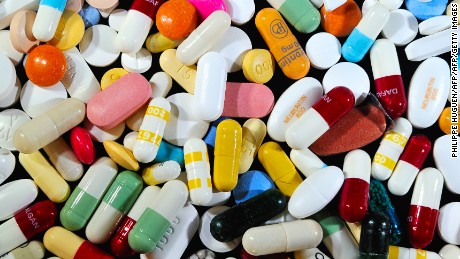
Inside the World of the Class A Student Headline 3 (BBC News, 2019)Image result for drugs (CNN, 2016)

Language such as ‘crisis’ and ‘unknown’ aim to create a moral panic with ‘the moral barricades being manned by editors, bishops, politicians, etc’ (Cohen, 2011). News outlets often focus on the effect that drugs have on young people hence through quoting ’15 year old’ rather than using the boys name, the reader will focus wholly on his age and believe this is happening to most young people rather than just the few in reality.

 Statistics are often used within the articles in order to address the real problem and personal opinions from “experts” are often quoted as a way of scaremongering without the outlet revealing their opinion, at an attempt to remain neutral.

Within the media and the drug stories which have been published, specific drugs tend to be associated with certain people. The UKDPC found that young people are most likely to be shown as cannabis and ecstasy users while offenders and parents are most commonly portrayed as heroin users (UKDPC, 2010). The class A drug heroin, is often linked to addiction and has seriously negative connotations attached therefore passing those connotations onto the users. Whereas cannabis is seen as a recreational drug and one in which young people use to experiment with and is not always seen as serious.

Although the media attempts to induce fear into its audience, does fear mongering really make people avoid drugs? A study by Montage discovered that students who listen to music with marijuana references are twice as likely to use the drug as their friends who do not listen to those songs, onscreen smoking increases the probability of people smoking and magazines aimed at young readers contain the most alcohol ads (Montage, 2011: 1). Drugs are often reported upon as negative, dangerous and life-destroying which they are in extreme cases. However, many news articles tend to ignore the possible health benefits of drugs and paint the picture that drugs ruin lives. 

Word Count: 553

Reference List: 

BBC News (2019) Drug Use [online] Available from: https://www.bbc.co.uk/news/topics/clm1wxp5nplt/drug-use [Accessed on 4th February 2019].

Tinker, Ben (2016) ‘Common Over-the-counter Drugs can Hurt your Brain’ CNN Available from: https://edition.cnn.com/2016/04/18/health/otc-anticholinergic-drugs-dementia/index.html [Accessed on 4th February 2019]. 

Cohen, Stanley (2011) Folk Devils and Moral Panics London: Routledge.

Montage, Michael (2011) ‘Drugs and the Media: An Introduction’ Informa Healthcare [online] 46 (3) : 1 Available from: http://web.b.ebscohost.com.winchester.idm.oclc.org/ehost/pdfviewer/pdfviewer?vid=7&sid=b364c933-29e4-45c2-94f3-19433a99b0a8%40pdc-v-sessmgr06 [Accessed on 4th February 2019].

Stangl-Eisenbach, Irmgard (2004) ‘A Private Police Against Drugs?’ Taylor and Francis Health Sciences [online] (11): 3. Available from: http://web.b.ebscohost.com.winchester.idm.oclc.org/ehost/pdfviewer/pdfviewer?vid=19&sid=b364c933-29e4-45c2-94f3-19433a99b0a8%40pdc-v-sessmgr06 [Accessed on 2nd February 2019].

UKDPC (2010) ‘Representations of Drug Use and Drug Users in the British Press’ [online] Available from: http://www.ukdpc.org.uk/wp-content/uploads/Evidence%20review%20-%20Representations%20of%20drug%20use%20and%20drug%20users%20in%20the%20British%20press.pdf [Accessed on 3rd February 2019].