Drugs are not only used by people all around the world, they are also commonly documented on within media outlets such as newspapers, films and magazines. But, what type of representation is created by the media when it comes to drugs?
According to Bonn and Nielsen, ‘few people have enough direct experience with the drug problem to gauge its severity…they learn about the drug problem indirectly through the media’ (Bonn and Nielsen, 2007: 727), a key reason as to why most people interact with the media. This emphasises the effect that the media has on people who are unaware of certain issues in society.
Noticing a pattern in what triggers drug news is important in order to allow us to understand what makes a story newsworthy. According to a study by the UK Drug Policy Commission (UKDPC), they found that drugs relating to criminal justice were the most common cause of news stories closely followed by death (UKDPC, 2010).
Taking a look at some of the most recent stories on BBC news, headlines often focus on students buying drugs as easily as it is to take them, drugs causing deaths and the ever-increasing problem of unknown substances:
Fake Xanax: Anxiety Drug Deaths an ‘Escalating Crisis’ Headline 1 (BBC News, 2019)
15-Year-Old Died From ‘Unknown Substance’ Headline 2 (BBC News, 2019)
Inside the World of the Class A Student Headline 3 (BBC News, 2019)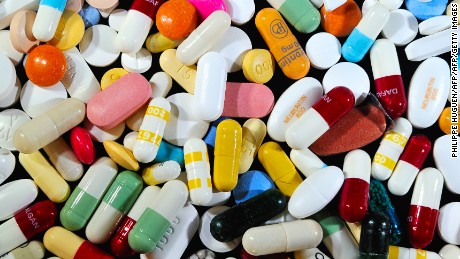 (CNN, 2016)
Language such as ‘crisis’ and ‘unknown’ aim to create a moral panic with ‘the moral barricades being manned by editors, bishops, politicians, etc’ (Cohen, 2011). News outlets often focus on the effect that drugs have on young people hence through quoting ’15 year old’ rather than using the boys name, the reader will focus wholly on his age and believe this is happening to most young people rather than just the few in reality.
Statistics are often used within the articles in order to address the real problem and personal opinions from “experts” are often quoted as a way of scaremongering without the outlet revealing their opinion, at an attempt to remain neutral.
Within the media and the drug stories which have been published, specific drugs tend to be associated with certain people. The UKDPC found that young people are most likely to be shown as cannabis and ecstasy users while offenders and parents are most commonly portrayed as heroin users (UKDPC, 2010). The class A drug heroin, is often linked to addiction and has seriously negative connotations attached therefore passing those connotations onto the users. Whereas cannabis is seen as a recreational drug and one in which young people use to experiment with and is not always seen as serious.
Although the media attempts to induce fear into its audience, does fear mongering really make people avoid drugs? A study by Montage discovered that students who listen to music with marijuana references are twice as likely to use the drug as their friends who do not listen to those songs, onscreen smoking increases the probability of people smoking and magazines aimed at young readers contain the most alcohol ads (Montage, 2011: 1). Drugs are often reported upon as negative, dangerous and life-destroying which they are in extreme cases. However, many news articles tend to ignore the possible health benefits of drugs and paint the picture that drugs ruin lives.
Word Count: 553
Reference List:
BBC News (2019) Drug Use [online] Available from: https://www.bbc.co.uk/news/topics/clm1wxp5nplt/drug-use [Accessed on 4th February 2019].
Tinker, Ben (2016) ‘Common Over-the-counter Drugs can Hurt your Brain’ CNN Available from: https://edition.cnn.com/2016/04/18/health/otc-anticholinergic-drugs-dementia/index.html [Accessed on 4th February 2019].
Cohen, Stanley (2011) Folk Devils and Moral Panics London: Routledge.
Montage, Michael (2011) ‘Drugs and the Media: An Introduction’ Informa Healthcare [online] 46 (3) : 1 Available from: http://web.b.ebscohost.com.winchester.idm.oclc.org/ehost/pdfviewer/pdfviewer?vid=7&sid=b364c933-29e4-45c2-94f3-19433a99b0a8%40pdc-v-sessmgr06 [Accessed on 4th February 2019].
Stangl-Eisenbach, Irmgard (2004) ‘A Private Police Against Drugs?’ Taylor and Francis Health Sciences [online] (11): 3. Available from: http://web.b.ebscohost.com.winchester.idm.oclc.org/ehost/pdfviewer/pdfviewer?vid=19&sid=b364c933-29e4-45c2-94f3-19433a99b0a8%40pdc-v-sessmgr06 [Accessed on 2nd February 2019].
UKDPC (2010) ‘Representations of Drug Use and Drug Users in the British Press’ [online] Available from: http://www.ukdpc.org.uk/wp-content/uploads/Evidence%20review%20-%20Representations%20of%20drug%20use%20and%20drug%20users%20in%20the%20British%20press.pdf [Accessed on 3rd February 2019].


